Technical Debt on Companies

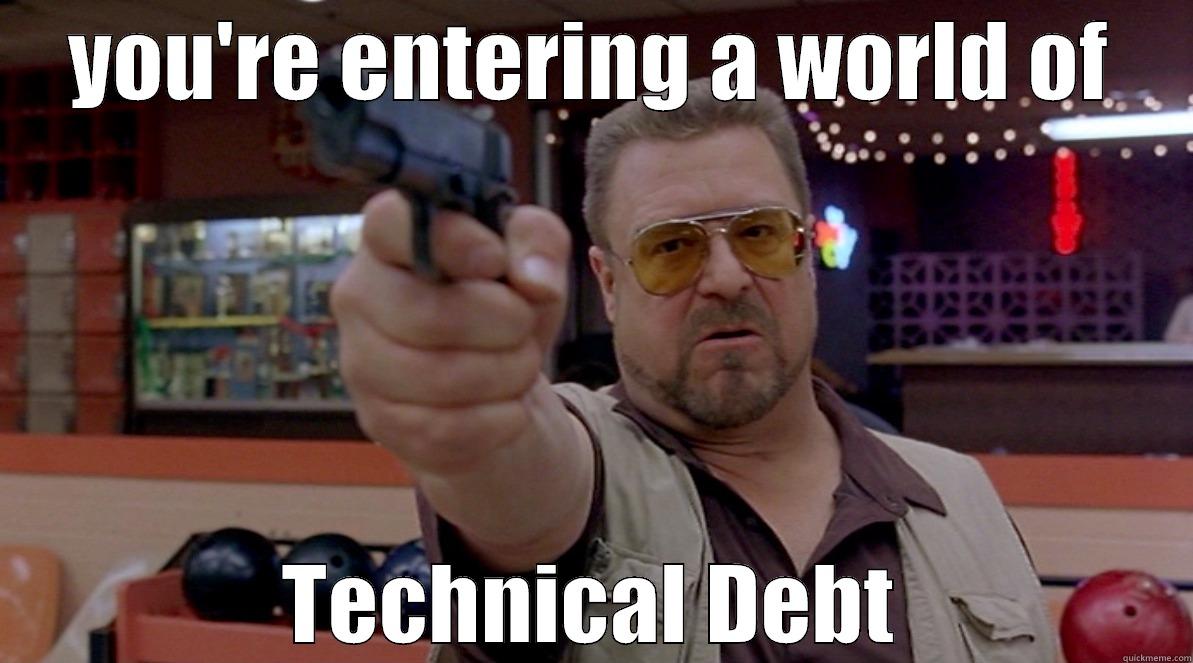
Technical DebtDebt in any form is a redflag. A lot of startups start with a vision but no clear direction. We code as per the final requirements to make sure it works once we reach the million userbase. There is nothing wrong however changes happen all the times and it’s hard to predict the final product resulting in discarding lot of code. Even worse, if the code stays, it affects the entire infrastructure badly. It’s like carrying diesel in your car trunk while you are running on petrol. You have a useful fuel but it’s not just right to drive your company.

Best practices include the following

– Build a modular software by dividing project into as small parts as possible

– Every part ( module ) is independent

– Ship the software as soon as possible

– Try to clean up code periodically. Ideally once a month for a day or every quarter. If you are not doing it at least twice a year, you will have to pay high interest on it

– If you can afford, hire a hacker whose job is to cut the code into 50% to perform the same amount of work.

In terms of code, lesser the better.

2016-03-06T15:49:28+00:00February 11th, 2015|

Delegation or Passing off your work ?

there is a major difference between letting other people do you work and delegation. Passing off your work means you are not responsible of it anymore. Delegation means that you are now more responsible for the work.

Doing things your self is easy and teaching is difficult. Delegation brings the best of your self, because whenever you are teaching you are more concerned about the quality than ever before. Want to try ? Teach some one driving 😉

During delegating, you have to write down the process and keep on iterating them based on best practices. Never ever expect or force people to do it your way. I recommend that you give them the deliverables and expectation and let them find a way to do it. If they do it better way, you have learnt some thing. If not, you share the way you do it and expected a better result. Delegation is an iterative process and not linear. You delegate, check back improve and then delegate again.

Bottom line. Delegation is teaching people how to perform better than you !

2016-03-06T15:50:39+00:00February 10th, 2015|

Types of fear with any opportunity !

Whenever there is an opportunity, it comes with a risk. There is a time limit in which you have to take a decision to spend specific amount of resources to achieve desirable result. Flip side is your result might not be desirable or not even close to that resulting in wastage of resources and possibly other damages that could not be predicted while taking risk. In addition there are some intangible losses and gains. These include but not limited to emotional & morale loss.

There are 2 big fears

– Fear of missing out

– Fear of loosing

When the fear of missing out overcomes the fear of loosing, you become Entrepreneur.

2016-03-06T15:49:35+00:00February 9th, 2015|

3 Pillars of Project – Scope/Time/Cost

Every project have 3 pillars or attributes which sets the outcomes of the project. They are

1) Scope and/or Quality

2) Time and/or Schedule

3) Cost and/or Resource

Owner of the project can only control two attributes, while the third one comes it self.It is impossible to have three of them as per desire. It is also called “Triple Constrain” in project management terms, just if in case some one want to read further about it.


2016-03-06T15:49:47+00:00January 27th, 2015|

Turning idea into business

Once you have validated the idea, next step is to turn it into a business ( AKA Startup ).

Here is the formula to calculate the economics

A = Number of people with the same problem

B = Amount that each A is going to pay

C = A * B

D = Cost of providing B to A

If C>D, then there is a business. If not, there is not.

Now C wont be greater than D at all times, but in the long term, it should be.

Disclaimer : This is a very basic formula and is to calculate viability within minutes before deep diving into the detailed business modeling.

2016-03-06T15:50:09+00:00January 22nd, 2015|

When the Product ready to Ship ?

NOW.

There is no perfect product in the world. It improves over time. The longer you take to build, the lesser are the chances of it being successful. Ship the product as soon as possible. Get the early adopters, take feedback and build based on that. Do not be lost under your assumptions.


2016-03-06T15:50:19+00:00January 11th, 2015|

Build what people want ( YC )

TL:DR

Instead of building something you want, ask people what they want.

Long

I am an Engineer my self and love building things. I have a way of thinking and I think that every one should think the way I think. This lead me to build a product that solves a problem in a specific way.

Here is where the mistake happens. I can start building things under the assumption that the world thinks like me. Other option is that I start asking the people if they would use my product ( Or pay for it ). Most difficult follow up question is to ask for upfront deposit for product. This is where the reality check happens. Earlier the question of cost comes in, better it is. People are generally nice enough NOT to refuse a free product.

So Summary, do ask the difficult question from the person you are building product for. If you do not, chances of success are rare.


2016-03-06T15:50:33+00:00January 11th, 2015|